

WALLS & TERRACES
Expand Your Outdoor Living Space by Taming the Hills and Slopes
Turn Unusable Slopes Into Functional Outdoor Spaces
Northern Virginia's rolling terrain creates beautiful views—but it also creates unusable yards, erosion headaches, and wasted space on your property. That steep slope behind your house? It's currently doing nothing but growing weeds and washing soil into storm drains every time it rains. Your side yard that drops six feet from driveway to backyard? It's a liability waiting to happen.
Our region's heavy clay soil makes these slope challenges even worse. It holds water like a sponge during wet months, then cracks apart when dry. Without proper engineering, slopes shift, settle, and erode—taking your landscaping, your soil, and eventually your investment with them.
At Green Lady Masonry & Drainage Solutions, we transform problematic slopes into terraced garden spaces, usable lawn areas, and stunning landscape features that handle Northern Virginia's demanding conditions. We understand how water moves through our soil. We know what happens when freeze-thaw cycles attack poorly built walls. And we've spent decades engineering retaining walls and terraced systems that stand up to the forces working against them.
Whether you need to reclaim a steep backyard, prevent erosion that's threatening your foundation, create level planting beds on a hillside, or add dramatic stone features that define your landscape—we deliver solutions that combine structural integrity, proper drainage, and lasting beauty.
Engineering Walls That Actually Hold
Why Professional Construction Matters for Retaining Walls

Building a retaining wall that lasts in Northern Virginia takes more than stacking stone or pouring concrete. It requires understanding the immense pressure that soil exerts against structures—and what happens when water adds its weight to that equation.
Amateur installations fail predictably. Walls lean forward as soil pushes from behind. Bases settle unevenly causing cracks when proper compaction was skipped. Water builds up with no escape route, creating hydrostatic pressure that eventually destroys even thick walls. Freeze-thaw cycles exploit any weakness, turning small cracks into structural failures.
Get it right, and you create walls that perform reliably for decades while adding substantial value to your property.
At Green Lady Masonry & Drainage Solutions, we approach every retaining wall and terrace project with the engineering fundamentals that amateur installations typically ignore. Our professional wall construction includes:
Excavation to stable soil below seasonal movement. Surface prep isn't sufficient. We dig to depths for a stable footing of the wall where soil won't shift, heave, or compress over time.
Engineered base construction with proper compaction. The foundation determines everything. We build bases using specific aggregate types, compacted in measured lifts to achieve the density that prevents settling.
Integrated drainage systems when needed behind every wall. Water is the primary enemy of retaining structures. We install dropboxes, perforated drain pipes, filter fabric, and drainage aggregate to move water away before it builds pressure.
Proper wall materials chosen based on the setting. As experienced, licensed masons we offer both mortared, stacked-stone walls and poured concrete retaining walls. The options offered to the client solve not only soil erosion and water problems, but specifically address the site’s aesthetic needs. Yes, you can build strong and everlastingly beautiful retaining walls at the same time.
Strategic placement of weep holes and drainage exits. With cinderblock walls water that gets behind walls needs escape routes. We provide them at calculated intervals.
Tie-backs and reinforcement for taller walls. When walls exceed certain heights, additional anchoring becomes essential. Following permitted plans, we integrate these systems during construction—not as afterthought repairs.
These aren't optional upgrades. They're the difference between walls that serve you well for thirty years—and walls that start failing after three winters.
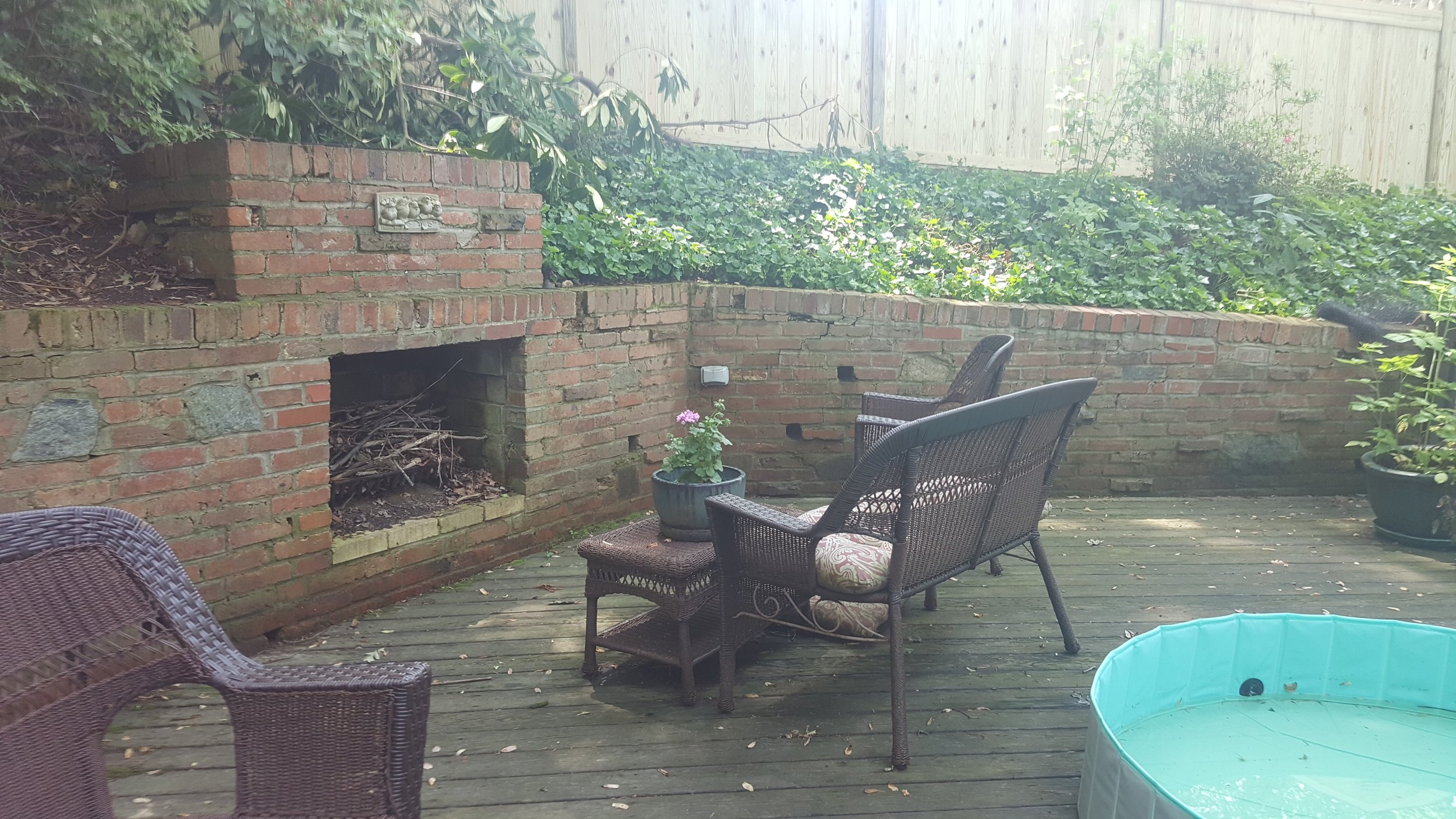
BEFORE
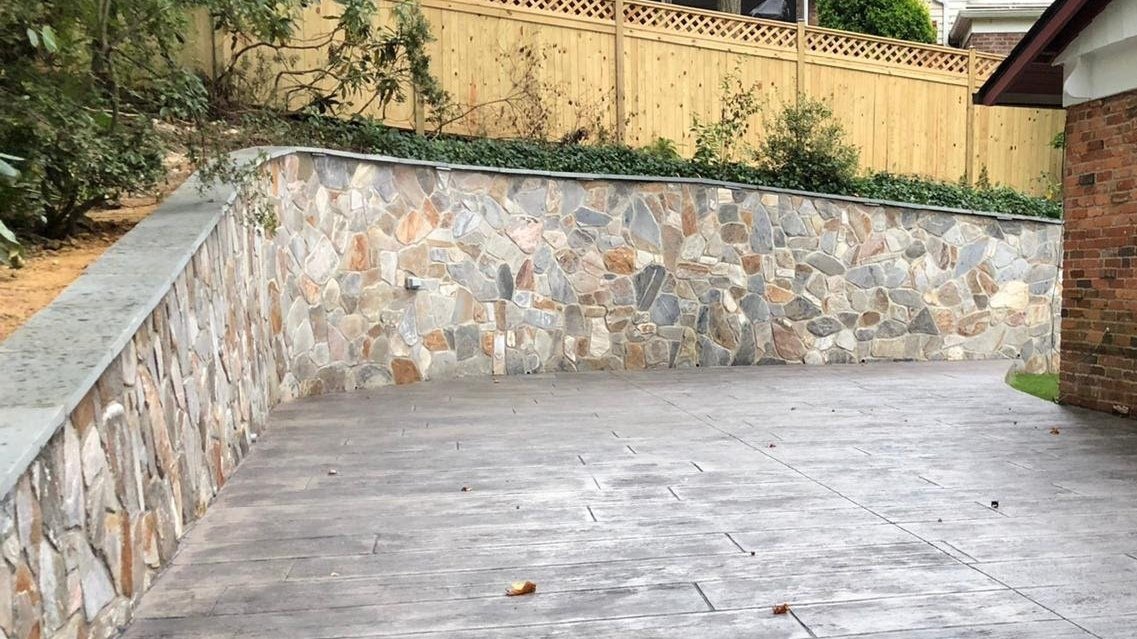
AFTER
WALLS & TERRACES PORTFOLIO
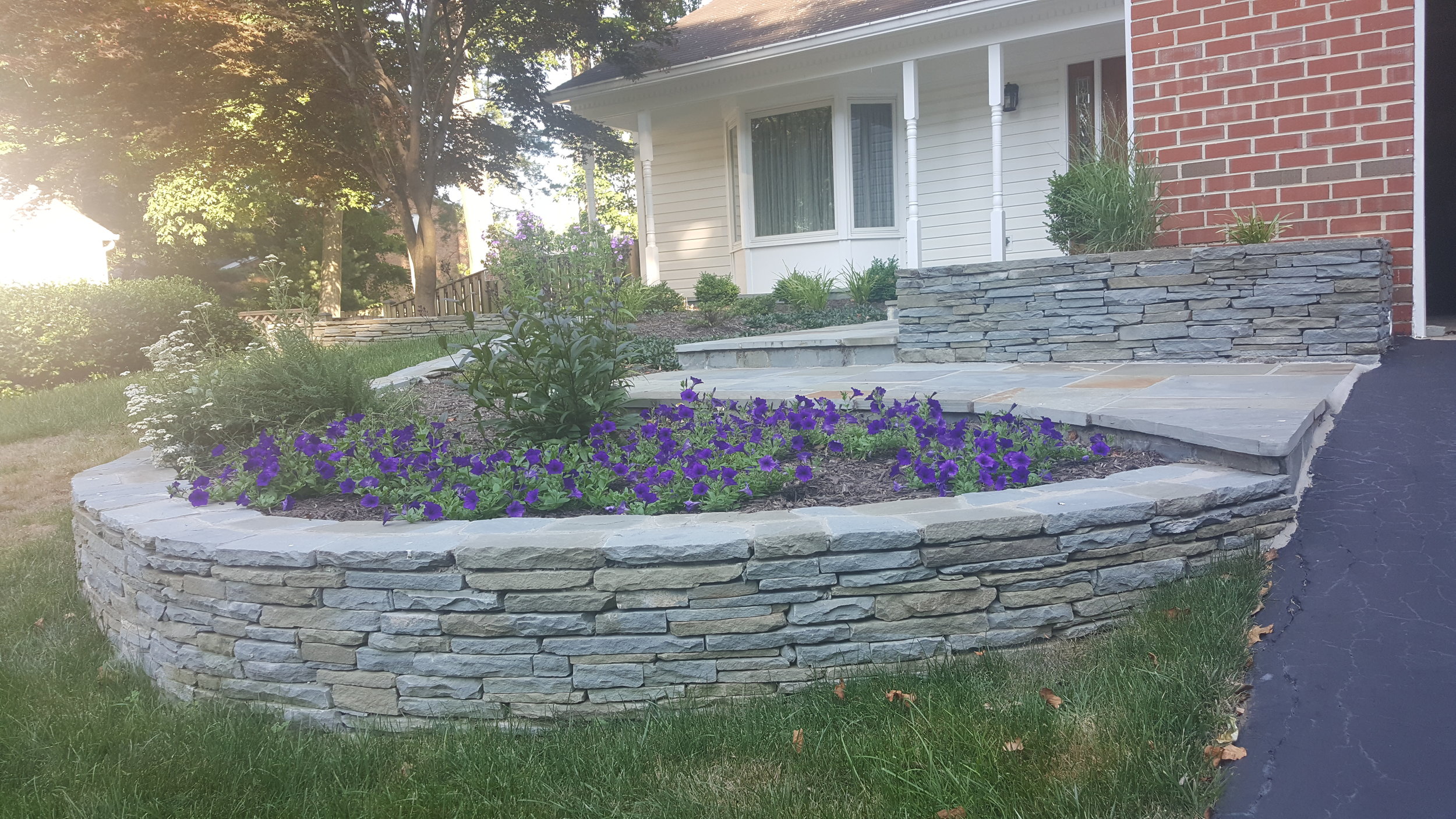
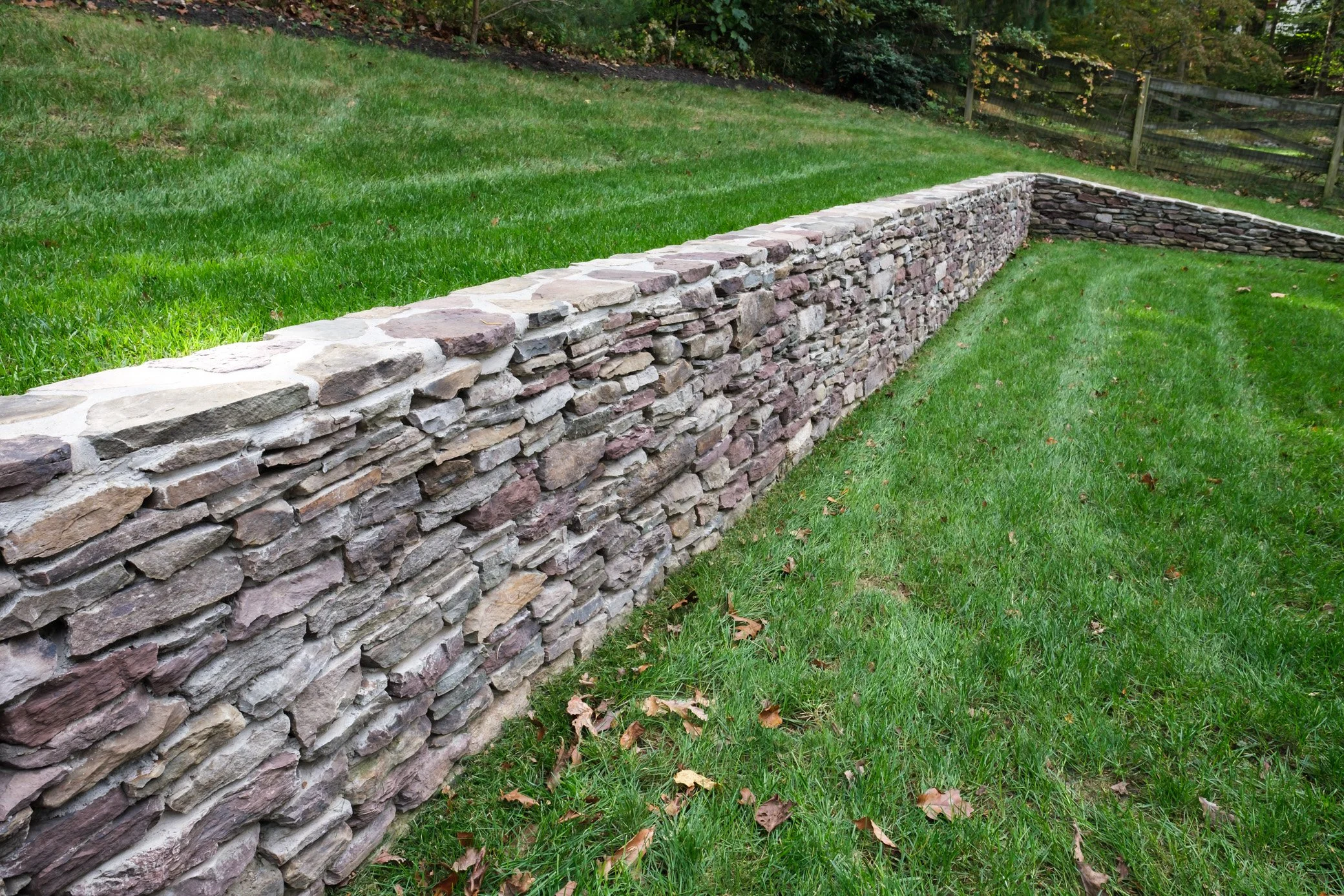
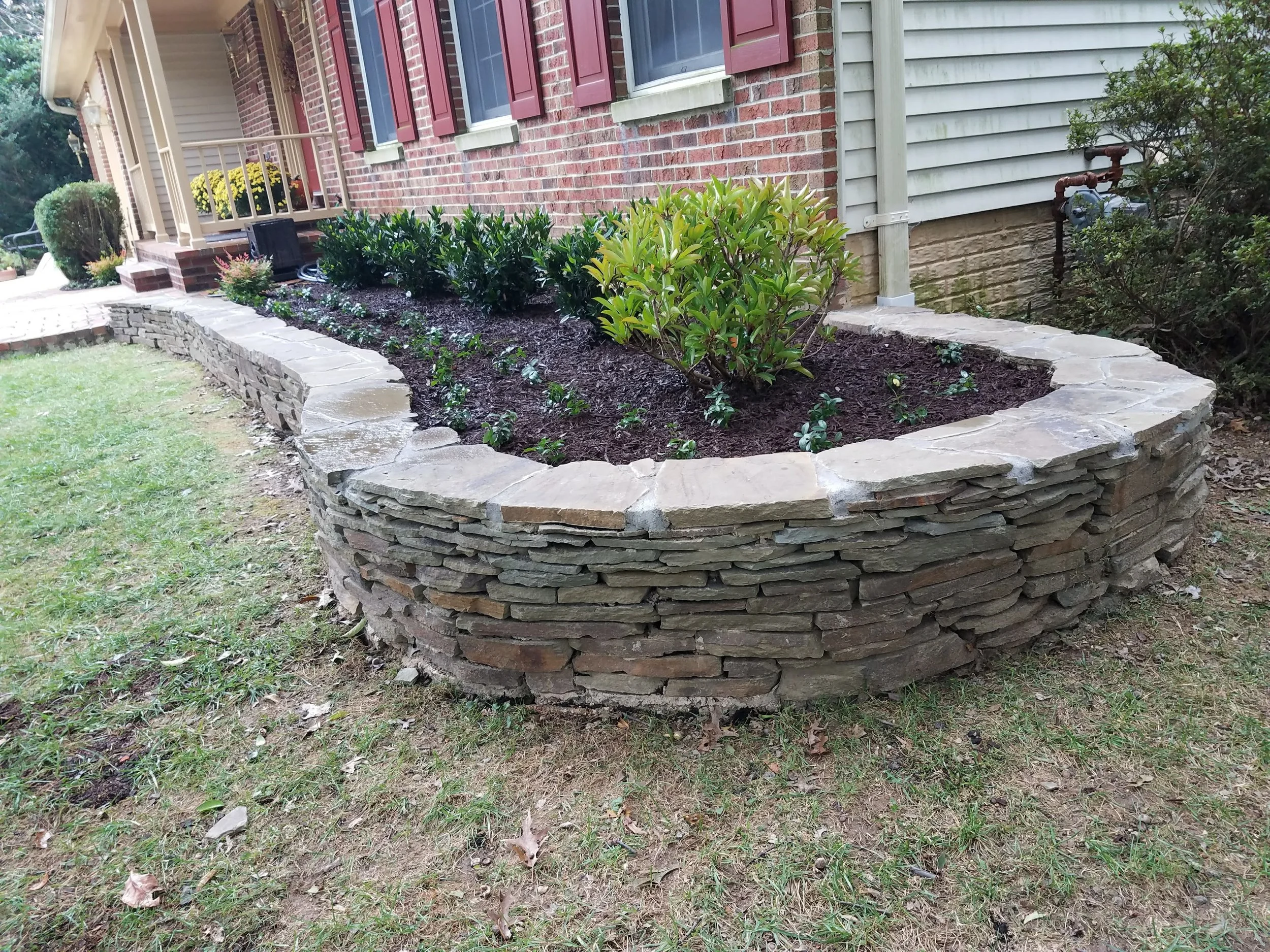
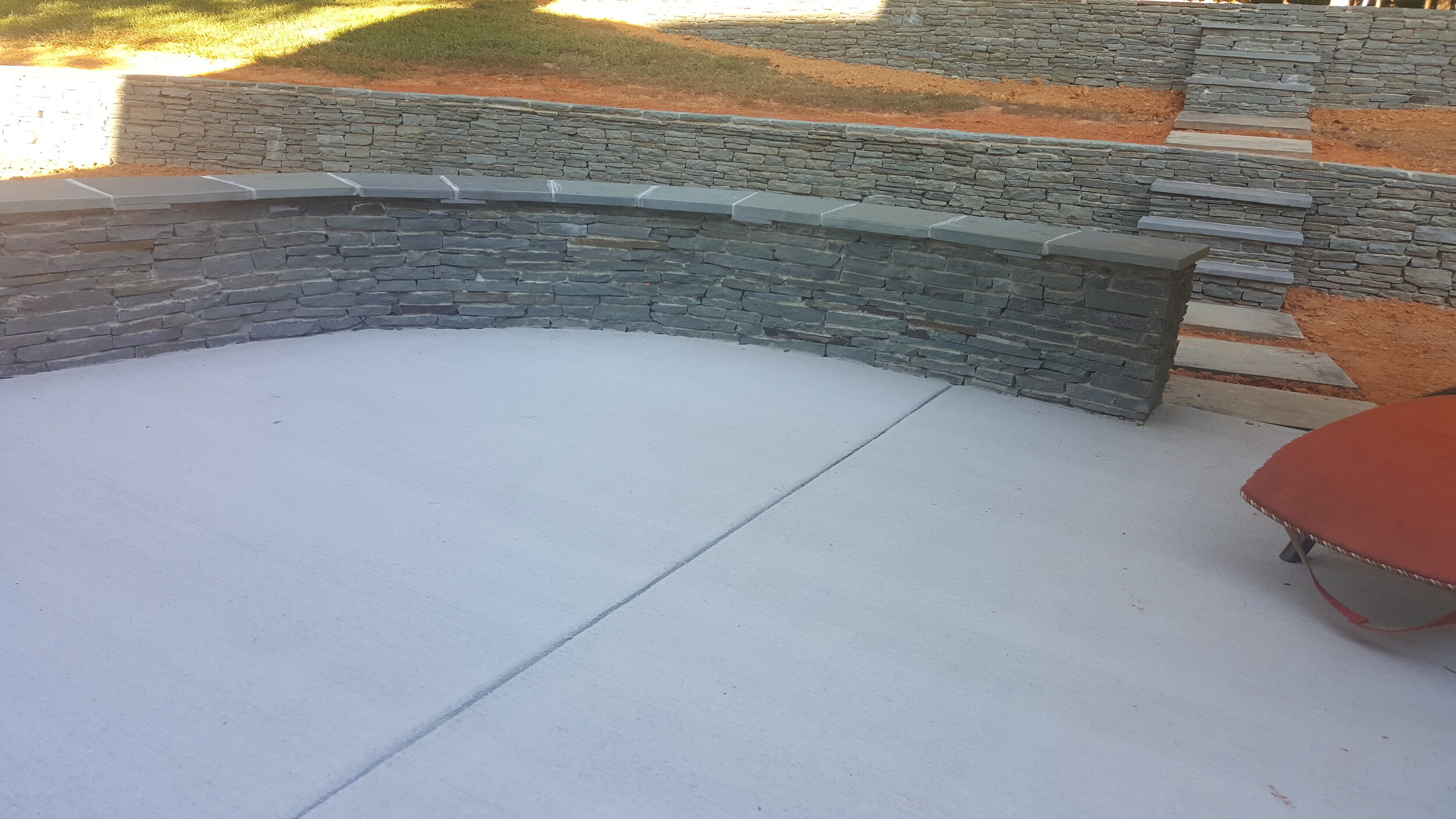
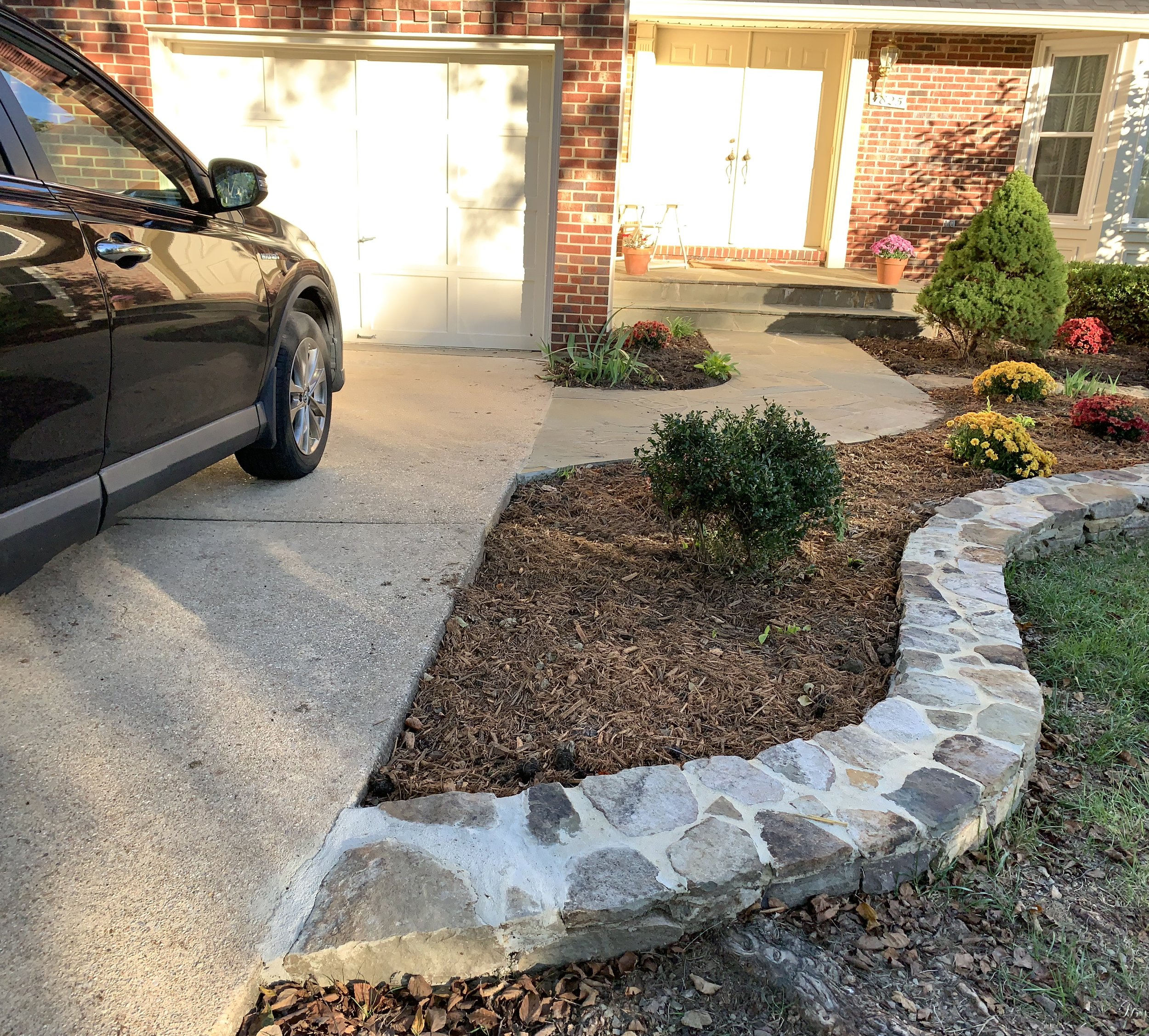
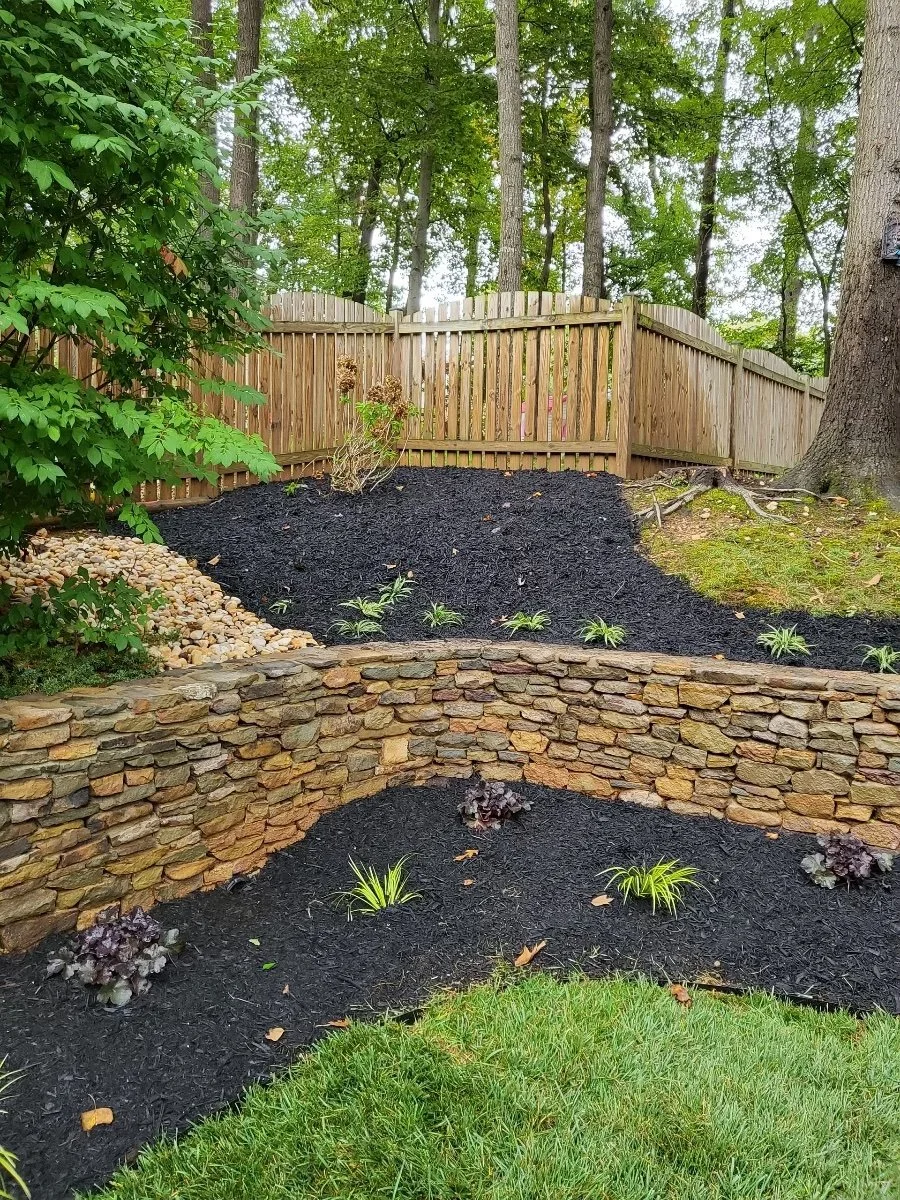
Explore our portfolio to see how we've solved slope challenges across Northern Virginia. From dramatic fieldstone retaining walls that hold back significant elevation changes to elegant terraced garden systems that create usable space from unusable hills, each project demonstrates our commitment to structural integrity, proper drainage, and thoughtful design. These installations prove what's possible when engineering expertise meets skilled stone craftsmanship.










Maintenance and Long-Term Performance
Properly engineered retaining walls require minimal maintenance, but attention to a few critical areas keeps them performing safely for decades.
Drainage must stay functional. Keep weep holes clear of debris and soil. Ensure discharge areas aren't blocked by mulch or plantings. Monitor for any signs of water seepage through wall faces, which indicates drainage system problems. Most wall failures we repair started with clogged or inadequate drainage that went unaddressed.
Monitor for movement or settlement. After heavy rains or freeze-thaw cycles, walk your walls looking for any outward lean, cracks, or separation between courses. Small movements caught early can be addressed before they become structural failures. During extended dry periods, check for gaps opening between stones or units—this indicates soil shrinkage behind the wall.
Material-specific care extends lifespan. Natural stone walls benefit from occasional repointing of mortar joints if mortared construction was used. Dry-stacked stone walls may need periodic resetting of displaced stones. Veneer stone installations should be inspected for any separation from backing walls. Concrete block retaining walls can be resealed to protect against moisture penetration.
Plantings require thoughtful management. Tree roots can exert tremendous pressure on walls—avoid planting large trees within root zone distance. Maintain plantings above walls so they don't create erosion channels. Use ground covers on terraced areas to prevent soil loss while avoiding plants with aggressive root systems that might destabilize the structure.
Wall Systems for Every Slope Challenge

Every slope presents unique engineering requirements. Soil composition. Water flow patterns. Elevation changes. Access for construction equipment. Budget constraints. We evaluate all these factors before recommending specific wall solutions.
Northern Virginia properties present challenges that generic retaining wall solutions simply can't handle. Our clay soil. Dramatic elevation changes. Heavy seasonal rainfall. Mature trees that can't be removed. Proximity to structures or property lines. We've solved these problems hundreds of times—and we know what works.
The Engineering Process Starts Before Construction
Our process begins well before any visible building takes place. We analyze your slope's grade, soil composition, and drainage patterns to understand exactly what we're working with. We determine the structural requirements for your specific elevation change and soil type. We design comprehensive drainage that prevents water accumulation behind walls. We plan excavation depth and base construction to reach stable soil. And we integrate the new walls with your existing landscape features, structures, and drainage systems so everything works together.
This engineering phase makes the difference. It determines whether your retaining wall serves you well for decades—or becomes a dangerous liability that costs you time, money, and sleepless nights.
Choosing the Right Wall System for Your Property
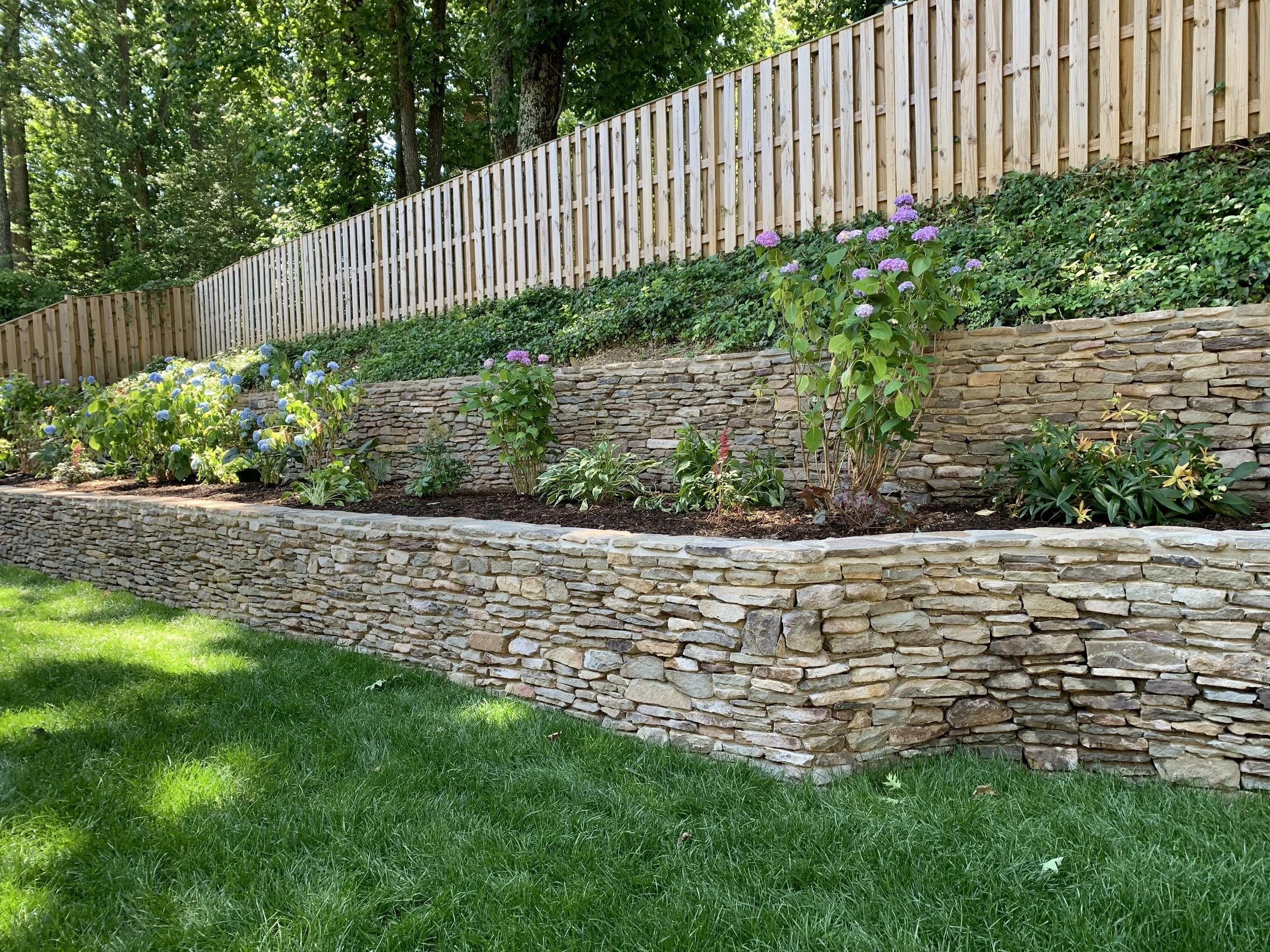
Your wall material choice affects structural capacity, drainage characteristics, construction timeline, cost, and aesthetic compatibility with your home and landscape. We work with every retaining wall system that makes sense for Northern Virginia properties—and we'll help you select what works best for your specific situation.
Natural Stone Walls
Fieldstone, bluestone, Colonial stone—natural stone creates walls that look like permanent landscape features rather than engineered structures. These materials weather beautifully, blend with any architectural style, and offer design flexibility that manufactured products can't match.
We hand-select each stone for appropriate size, shape, and structural characteristics. Then we fit them together—dry-stacked or mortared depending on height and application—to create installations that combine raw strength with natural beauty.
Natural stone works beautifully for both high retaining walls holding back significant soil loads and lower garden walls that define planting beds. The material's inherent weight and friction provide excellent structural stability.
Colonial Stone and Manufactured Block Systems
Modern concrete block systems deliver engineered performance with traditional aesthetics. These products come in styles that mimic natural stone, offer built-in drainage channels, and provide reliable structural capacity for walls of any height.
We build these systems with proper base preparation, mechanical connections between courses, and integrated drainage systems that manufacturers specify. Done correctly, these walls combine the engineered reliability of concrete with appearances that satisfy even strict HOA requirements.
Block systems excel when consistent dimensions matter, when construction timeline is critical, or when budget requires maximizing structural capacity per dollar spent.
Veneer Stone Walls
Concrete block structural walls faced with natural stone veneer deliver the best of both approaches—engineered concrete strength with natural stone beauty. This technique works exceptionally well for taller walls, for situations requiring specific structural capacities, or when drainage integration demands precise construction.
We build the structural concrete block wall first, with all necessary drainage, reinforcement, and connections. Then we apply natural stone veneer to create the appearance of solid stone construction. The result performs like engineered concrete but looks like traditional stonework.
Terraced Wall Systems
When slopes exceed what single walls can safely retain, terracing becomes necessary. Multiple shorter walls stepping up a slope distribute soil pressure more safely than one tall wall, create level planting or lawn areas between each terrace, and often integrate more naturally into landscape design.
We design terraced systems with proper spacing between wall levels, integrated drainage that moves water safely down the slope, and coordinated construction that addresses the entire slope as one engineered system rather than isolated walls.
Terracing works beautifully for creating usable garden spaces from steep yards, for managing severe erosion, or when architectural interest matters as much as slope stabilization.
Seat Walls and Garden Walls
Sometimes a retaining wall can partner to define patio edges while providing comfortable seating and hold back soil erosion and surplus water. Garden walls separate planting areas, create privacy screens, or add architectural interest without structural requirements.
These lower walls still demand proper construction—stable bases, drainage consideration, and appropriate materials—but allow more creative freedom in design, material selection, and decorative elements.
The Green Lady Difference in Wall Construction
What makes our retaining wall installations different from the competition? We're perfectionists about the engineering that amateur contractors ignore. When we calculate soil loads and required wall capacity, we're not guessing—we're applying proven structural principles that ensure walls won't fail under pressure. When we install drainage systems, we're not just dumping gravel behind the wall and hoping—we're engineering complete systems that move water away before it creates problems.
Deborah and Gerardo personally review every wall plan before construction begins. They're not delegating your project to a crew and hoping it turns out right—they're on-site, ensuring that what gets built matches what was engineered. This hands-on approach costs us more time and attention than our competitors invest, but it's why our walls stand straight while others lean, crack, and fail.
We're realistic about what works and what doesn't in Northern Virginia. If your slope presents challenges that make certain solutions impractical or risky, we'll tell you upfront. We'd rather have an honest conversation now than build something we know will underperform later.
Wall Repair and Replacement Services
We frequently repair or replace failing retaining walls that were built without proper engineering or drainage. The patterns are predictable and depressing.
Walls leaning forward because no drainage system was installed—or because the installed system never worked properly. Walls settled unevenly because base preparation was inadequate or skipped entirely. Stone walls collapsed because they were built without proper batter or structural principles. Veneer walls separated from their backing because mechanical connections were omitted. Concrete block walls cracking because no reinforcement was included.
Every one of these failures was preventable with proper initial construction.
Fixing Problems at the Source
When we rebuild failing walls, we address root causes—not just visible symptoms. That might mean installing the drainage system that should have been there originally. Excavating deeper to reach stable soil. Regarding the slope to reduce pressure on new walls. Or completely reimagining the approach to better suit your property's actual conditions.
The goal isn't just to build a new wall. It's to solve the underlying problems so your replacement actually lasts. We've seen too many homeowners pay twice for the same retaining wall because the first contractor cut corners. We'd rather do it right once.
Integrating Walls with Your Complete Landscape
Retaining walls rarely exist in isolation—they create the structure that makes other landscape features possible. The best installations integrate seamlessly with patios, steps, walkways, drainage systems, and landscape plantings.
We frequently combine retaining wall construction with patio building to create level outdoor living spaces, step installation to provide safe access between terrace levels, comprehensive drainage solutions to manage water flow across your entire property, and landscape grading to improve overall site drainage. This integrated approach means your walls aren't just isolated features—they're essential components of a well-planned outdoor space.
Working with Your HOA
Northern Virginia HOA requirements can be stringent—and we know them. We've worked with dozens of HOAs across the region and understand their approval processes, material restrictions, and aesthetic expectations. We help you prepare submissions that address typical concerns upfront, recommend materials and styles that satisfy requirements while meeting your vision, and coordinate any necessary revisions efficiently. Our experience means fewer delays and smoother approvals.
Frequently Asked Questions About Retaining Walls and Terraces
-
Wall height capability depends on multiple factors—soil type, water table, wall construction method, and local codes. In Northern Virginia, walls under three feet can be built of stone, concrete block or cinderblock without engineered plans.
Walls over three feet typically require engineering calculations and sometimes building permits. Very tall walls (over six feet) may need specialized construction techniques, reinforcement systems, and specific footing depths for stability.
We evaluate your specific site conditions and provide honest recommendations about what's feasible, what's optimal, and what regulations apply.
Some slopes are better addressed with terraced systems—multiple shorter walls—rather than one tall wall.
-
Most retaining wall failures stem from water pressure buildup, inadequate base construction or simply age. When water accumulates behind a wall with no escape route, it creates hydrostatic pressure that eventually pushes the wall outward or collapses it entirely.
We prevent this by installing complete drainage systems—perforated pipe, drainage aggregate, filter fabric, and weep holes—that move water away before pressure builds.
Base failures happen when walls fail and begin to lean and eventually fail. This is caused by shallow trench installation or when the contractor did not pour the required strengthening concrete in the walls. Both cause wall instability.
Trench size= Type of materials used + Height of wall+ Weight of soil load, i.e., soil, roots and plants+ water-run-off from above.
Trench Size = L x W x Depth of the Wall Height, Material Weight, and Soil Load
-
We can build during most weather conditions, though some situations require special precautions. Frozen ground must thaw before excavation.
Extremely wet conditions may require temporary water management before construction can proceed. Mortared stone walls need appropriate temperatures for proper curing.
We evaluate conditions on a project-by-project basis and adjust schedules when necessary to ensure proper construction. Sometimes waiting a few weeks for better conditions is the right choice—we'll be honest about when that's the case.
-
Comprehensive drainage is non-negotiable in our retaining wall construction.
We install perforated drain pipe at the base of the wall, embed it in clean drainage stone, wrap everything in filter fabric to prevent soil infiltration, and route the pipe to appropriate discharge points—often tying into existing drainage systems or creating new discharge areas.
We space weep holes at calculated intervals to allow water escape. For taller walls or severe water conditions, we may install multiple drainage zones. The goal is ensuring water never builds up behind the wall, regardless of how much rain falls or how saturated soil becomes.
-
Absolutely—this is one of the most common reasons homeowners invest in retaining walls. By holding back soil at the high side of a slope, walls create level terraces perfect for patios, lawn areas, play spaces, or gardens.
We regularly design integrated projects where retaining walls create the level area and we then install patios, walkways, or other features in the newly created space. The key is planning these elements together so the wall, drainage, and surface features all work as one coordinated system.
Moreover, we create and install entertainment and play spaces for the whole family to use, including play set enclosures and concrete slabs on the newly, flat yard for playhouses.
-
Replacement typically requires complete removal of the failed wall and excavation behind it to assess soil conditions and identify why the original wall failed.
Often we discover inadequate base preparation, no drainage system, or construction on unstable soil. We address those root causes before building the replacement—which means proper excavation, engineered base construction, comprehensive drainage installation, and appropriate wall construction for your site's specific conditions.
Most wall replacement projects take one to three weeks from demolition through final grading and cleanup. We protect surrounding landscaping during the work and coordinate any necessary plantings or surface restoration afterward.
Ready to Reclaim Your Sloped Property?
Contact Green Lady Masonry & Drainage Solutions today for your free consultation. We'll visit your property, assess your slopes and drainage, discuss material and design options, and provide honest recommendations about the best solutions for your specific situation and budget. No pressure, no sales tactics—just straightforward expertise from contractors who've been solving Northern Virginia's slope challenges for decades.
Whether you're dealing with erosion, want to create usable outdoor space from steep terrain, or need to replace failing walls, we'll deliver solutions that work.
Usable outdoor space shouldn't be limited by your property's slopes—proper engineering reclaims what you're currently losing.
Call us at (703) 975-7516 or fill out our contact form to schedule your consultation. Let's talk about transforming your challenging terrain into beautiful, functional outdoor living space.